Image not found

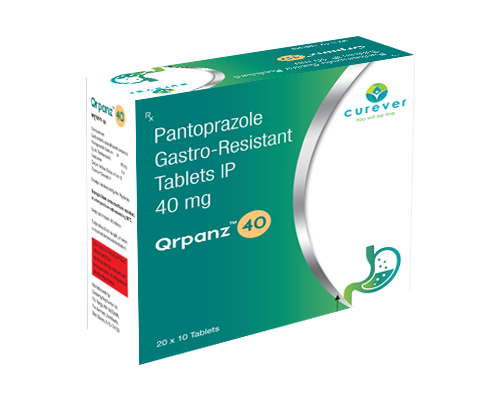
QRPANZ 40

Company Name : Curever Pharma

Dosage Form : TABLET

Route of Administration : Oral

Therapeutic Category : Digestive

Pack Size : Strip of 10 Tablets

Qty : 1

Mrp: Rs. 90.00


**(Note : Prices are subject to change depending on the batch availability)


Report an error in composition detail

*** The Substitution of the prescription will be done after approval/consent of your Registered Medical Practitioner: By Reference Pharmacy Practice Guideline 2015. India

*** Please ensure that you have Original prescription ready to show our Pharmacist once he comes to deliver the medicines. In absence of Original prescription, we will unable to hand over the medicines.

Compositions:

General Information

•Pantoprazole is a proton pump inhibitor, acts in the stomach to decrease the production of stomach acid. Pantoprazole works by inhibiting the action of the proton pumps, which reduces the production of stomach acid.
• Gastro oesophageal reflux disease, including treatment of symptoms such as heartburn, acid regurgitation and pain on swallowing and long-term management of reflux oesophagitis.
• Treating peptic ulcers.
• Preventing peptic ulcers in people who need continued treatment with non-steroidal anti-inflammatory painkillers (NSAIDs) and are at risk of ulcers.
• Eradicating a type of bacteria called Helicobacter pylori from the gut of people with a peptic ulcer (in combination with antibiotics).
• Excessive secretion of stomach acid due to a tumour or enlargement of the pancreas (Zollinger-Ellison syndrome).
• The number of tablets to take, how often and for how long will depend on the condition being treated. It is important to follow the instructions given by your doctor. These will also be printed on the dispensing label that your pharmacist has put on the packet of medicine.
• Pantoprazole tablets should be swallowed whole with a drink of water one hour before a meal. Do not chew, crush or break the tablets.
• If you forget to take a dose take it as soon as you remember. However, if it is almost time for your next dose just skip the missed dose and take your next dose as normal. Don't take a double dose to make up for a missed dose.
• Stomach cancer can have similar symptoms to stomach ulcers, and these symptoms can be relieved by pantoprazole. For this reason, if it is suspected that you have a stomach ulcer, your doctor should exclude the possibility of stomach cancer before you start treatment with this medicine. Otherwise, this medicine could mask the symptoms of stomach cancer and therefore delay diagnosis of this condition. This is particularly important if you are middle aged or older and have new or recently changed symptoms.
• As pantoprazole decreases the acidity in the stomach, it may lead to a slightly increased risk of getting stomach infections such as Salmonella and Campylobacter.
• If you are taking a proton pump inhibitor medicine such as this one for longer than three months it may cause the level of magnesium in your blood to fall. This is more likely if you are also taking digoxin or a diuretic medicine (see end of factsheet). Symptoms of low magnesium can include fatigue, muscle spasms or twitching, convulsions, disorientation, dizziness and increased heart rate. You should tell your doctor if you experience any of these symptoms, as your level of magnesium may need to be checked and corrected.
• Proton pump inhibitor medicines such as this one, particularly if taken in high doses for longer than a year, may slightly increase the risk of breaking a bone in your hip, wrist or spine. If you are elderly, or have osteoporosis or risk factors for getting osteoporosis, it is important to make sure that you have an adequate intake of calcium and vitamin D to avoid any problems with your bones. Your doctor may want you to take calcium and vitamin D supplements if you don't get enough in your diet. Ask your doctor for further advice.
• If you have any liver problems, your liver function should be monitored regularly while you are having treatment with this medicine.
• In people having long-term treatment with this medicine, eg for Zollinger-Ellison syndrome, the medicine may reduce the absorption of vitamin B12 (cyanocobalamin) from the gut into the bloodstream. Ask your doctor for more information or advice about this.
• Decreased kidney function.
• Decreased liver function.
• People with osteoporosis or who are at risk of osteoporosis, for example people taking long-term corticosteroid medicines and women who have passed the menopause. (This medicine may increase the risk of breaking a bone - see the warning section above.)
• Vitamin B12 deficiency.
• Children under 12 years of age. This medicine should not be used if you are allergic to one or any of its ingredients. Please inform your doctor or pharmacist if you have previously experienced such an allergy. If you feel you have experienced an allergic reaction, stop using this medicine and inform your doctor or pharmacist immediately.
•Certain medicines should not be used during pregnancy or breastfeeding. However, other medicines may be safely used in pregnancy or breastfeeding providing the benefits to the mother outweigh the risks to the unborn baby. Always inform your doctor if you are pregnant or planning a pregnancy, before using any medicine.
• The safety of this medicine for use during pregnancy has not been established. It should only be used during pregnancy if the expected benefit to the mother is greater than any possible risk to the developing baby. Seek medical advice from your doctor.
• This medicine may pass into breast milk. It should only be used in women who are breastfeeding if the expected benefit to the mother is greater than any possible risk to the nursing infant. Seek medical advice from your doctor.
•Medicines and their possible side effects can affect individual people in different ways. The following are some of the side effects that are known to be associated with this medicine. Just because a side effect is stated here does not mean that all people using this medicine will experience that or any side effect.
• Headache.
• Disturbances of the gut such as diarrhoea, constipation, abdominal pain or discomfort, bloating, wind.
• Dry mouth.
• Dizziness.
• Sleep disorders.
• Skin reactions such as rash or itching.
• Feeling weak, tired or generally unwell.
• Increased liver enzymes.
• Blurred vision.
• Increased levels of fats called cholesterol or triglycerides in the blood.
• Weight changes.
• Taste disturbances.
• Depression.
• Pain in the muscles or joints.
• Swollen ankles due to fluid retention (peripheral oedema).
• Breast swelling in men.
• Increased body temperature.
• Confusion.
• Hallucinations.
• Decreased number of white blood cells or platelets in the blood (leucopenia or thrombocytopenia).
• Decreased level of sodium in the blood (hyponatraemia).
• Decreased level of magnesium in the blood (hypomagnesaemia) - see warning section above.
• Liver problems.
• Jaundice.
• Kidney inflammation (interstitial nephritis).
• Increased sensitivity of the skin to UV light (photosensitivity).
• Severe skin reactions. The side effects listed above may not include all of the side effects reported by the medicine's manufacturer. For more information about any other possible risks associated with this medicine, please read the information provided with the medicine or consult your doctor or pharmacist.
•You should tell your doctor or pharmacist what medicines you are already taking, including those bought without a prescription and herbal medicines, before you start treatment with this medicine. Similarly, check with your doctor or pharmacist before taking any new medicines while taking this one, to make sure that the combination is safe. Pantoprazole should not be taken by people taking the anti-HIV medicines atazanavir or rilpivirine. This is because pantoprazole reduces the absorption of these medicines from the gut and could make them less effective at treating HIV infection. Proton pump inhibitors such as pantoprazole are not recommended for people taking the anti-HIV medicines raltegravir or saquinavir, because they may increase the blood level of these medicines and may therefore increase the risk of their side effects. Due to its effect on the acidity in the stomach, pantoprazole may reduce the absorption of the following medicines from the stomach, which could make them less effective:
• erlotinib
• itraconazole
• ketoconazole
• lapatinib
• pazopanib
• posaconazole
• ulipristal
• vandetanib. This medicine may enhance the anti-blood-clotting effect of anticoagulant medicines such as warfarin. As this could increase the risk of bleeding, if you are taking warfarin your doctor may want to perform extra monitoring of your blood clotting time (INR) when you start and stop treatment with this medicine, or if you take it irregularly. There may be a greater chance of the level of magnesium in your blood falling too low if you are taking this medicine with digoxin, diuretics (such as bendroflumethiazide or furosemide) or other medicines that can lower blood magnesium levels. If you are taking one of these your doctor may want you to have a blood test to check your magnesium levels before you start taking pantoprazole and then regularly during treatment.
•Read the package insert and/or patient product information sheet that comes with your prescription.
• Most medications should be stored in a dry place away from heat and humidity.
• Some medications also have special instructions for storage. Check for special instructions on your prescription label.
• If your medication needs to be protected from light, it should be stored in a container that filters out light, such as a clean film canister.
• If your medication needs to be refrigerated, and you do not have a fridge available (for example, if you are working outside or on the road all day), try using a cooler with an ice pack. An ordinary cooler found at hardware or sporting goods stores will do.
•Consult your doctor for further instructions and also read the package insert and/or patient product information sheet that comes with your prescription.

Important Advisory for PANTOPRAZOLE

Drug not to be used with alcohol N/A
Drug to be avoid with alcohol N/A
Drug Contraceptive Interaction N/A
Medications which should be taken on empty stomach N/A
Medications which should be taken with food N/A
Preganacy Category Description Either animal-reproduction studies have not demonstrated a fetal risk but there are no controlled studies in pregnant women, or animalreproduction studies have shown an adverse effect (other than a decrease in fertility) that was not confirmed in controlled studies in women in the first trimester i.e 0-14 weeks (and there is no evidence of a risk in later trimesters).
Drug Interaction with Molecules Drug Interaction
No Data Available