Image not found

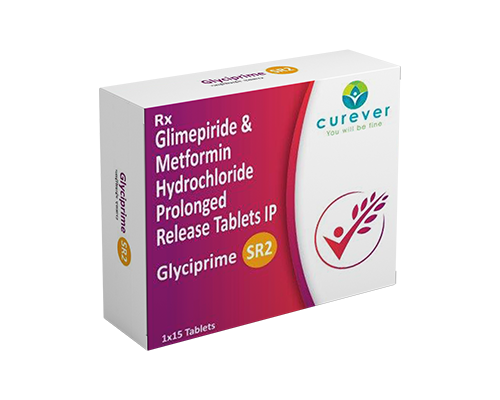
Glyciprime SR2

Company Name : Curever Pharma

Dosage Form : TABLET

Route of Administration : Oral

Therapeutic Category : Diabetic

Pack Size : Strip of 15 Tablets

Qty : 1

Mrp: Rs. 90.00


**(Note : Prices are subject to change depending on the batch availability)


Report an error in composition detail

*** The Substitution of the prescription will be done after approval/consent of your Registered Medical Practitioner: By Reference Pharmacy Practice Guideline 2015. India

*** Please ensure that you have Original prescription ready to show our Pharmacist once he comes to deliver the medicines. In absence of Original prescription, we will unable to hand over the medicines.

Compositions:

General Information

Important Advisory for GLIMEPIRIDE

No Data Available
Drug Interaction with Molecules Drug Interaction
Corticosteroids Reduced hypoglycaemic action
Phenytoin Reduced hypoglycaemic action
Thiazides Reduced hypoglycaemic action

General Information

•Metformin is used to help control blood sugar levels in people with type 2 or non-insulin dependent diabetes (NIDDM). People with diabetes have a deficiency or absence of a hormone produced by the pancreas called insulin. Insulin is the main hormone responsible for the control of sugar in the blood. In type 2 diabetes the pancreas does not produce sufficient insulin and the cells of the body are resistant to the low levels of insulin circulating in the blood. Insulin would normally make the cells remove sugar from the blood, hence in type 2 diabetes blood sugar levels can rise too high. Firstly, it reduces the amount of sugar produced by cells in the liver. Secondly, it increases the sensitivity of muscle cells to insulin. This enables the cells to remove sugar from the blood more effectively. Finally, it also delays absorption of sugar from the intestines into the bloodstream after eating. Overall, metformin reduces blood sugar levels both between and directly after meals. Metformin is used as a first line treatment of type 2 diabetes in people who are overweight. It is used when diet and exercise have failed to control blood sugar levels. It can also be used in combination with other antidiabetic medicines to provide better control of blood sugar.
• Type 2 (non-insulin dependent) diabetes in adults, adolescents and children aged 10 years and over, when diet alone has failed to fully control blood sugar. Metformin may be used on its own, in combination with other oral antidiabetic medicines, or with insulin.
• Polycystic ovary syndrome (unlicensed use).
• The dose prescribed and how often to take this medicine depends on how well your blood sugar is controlled, among other things. Follow the instructions given by your
• doctor. These will be printed on the dispensing label that your pharmacist has put on the medicine.
• Metformin tablets are usually taken two or three times a day. They should be taken either during or just after meals.
• Metformin sachets are also usually taken two or three times a day. The contents of one sachet should be dissolved in 150ml water and taken immediately, either during or just after a meal.
• Metformin SR tablets are usually taken once or twice a day. These tablets should be swallowed whole with a drink either during or just after a meal. They must not be broken, crushed or chewed.
• If you forget to take a dose of this medicine, take it with your next meal, unless you were due to take a dose then anyway. In this case, leave out the missed dose. Do not take a double dose to make up for a forgotten dose.
• It is important that you continue to follow the diet and exercise advice given to you by your doctor or nurse while you are using this medicine. This medicine only helps to control your blood sugar levels and should not be used as a substitute for eating healthily and taking regular exercise.
• Your doctor may want you to check your blood sugar level from time to time while you are taking this medicine. Make sure you discuss how to do this and how often with your GP, pharmacist or diabetes specialist.
• You should avoid drinking alcohol while you are taking this medicine, as it can increase the risk of low blood sugar (hypoglycaemia) and lactic acidosis (see below).
• When used on its own, metformin does not usually cause low blood sugar levels (hypoglycaemia). However, you may get low blood sugar if you take metformin in combination with other antidiabetic medicines. If this applies to you, you should make sure that you are aware of the symptoms of hypoglycaemia (these may include cold sweats, cool pale skin, tremor, anxious feeling, unusual tiredness or weakness, confusion, difficulty in concentration, excessive hunger, temporary vision changes, headache or nausea) and what to do if you experience these symptoms. Discuss this with your GP, pharmacist or diabetes specialist.
• Metformin can cause a rare but serious condition called lactic acidosis, which is an excess of lactic acid in the blood. It is more likely to occur in people with decreased kidney function. Drinking excessive amounts of alcohol, particularly on an empty stomach or if you have liver problems, can also increase the risk of lactic acidosis. Your doctor will monitor you for this side effect, but symptoms that might indicate its development include rapid and/or deep breathing and non-specific symptoms such as feeling weak, sick or generally unwell, vomiting, abdominal pain, or unusual muscle pains or discomfort. You should stop taking this medicine and consult your doctor if you experience any of these.
• Your kidney function should be monitored regularly while you are taking this medicine. Your doctor will usually want to check your kidney function once or twice a year, or more frequently if you are elderly or have any existing kidney problems.
• Your doctor will ask you to stop taking this medicine temporarily if you are going to have a certain type of X-ray involving an injection of iodinated dye (contrast agent). Tell your doctor that you are taking metformin if you are due to have this type of X-ray. You should not start taking this medicine again until 48 hours after the X-ray, and only after your kidney function has been tested and found to be normal.
• Consult your doctor about your diabetes treatment if you are due to have surgery under a general anaesthetic. In these situations blood sugar is normally controlled by insulin, so your doctor may ask you to stop taking this medicine 48 hours before surgery.
• The shells of Metformin SR tablets may pass through your gut undigested and be visible in your faeces. This is normal.
• Metformin powder contains aspartame and may not be suitable for people with an inherited disorder of protein metabolism called phenylketonuria.
• Read the package insert and/or patient product information sheet that comes with your prescription.
• Diabetic keto-acidosis.
• Diabetic pre-coma (due to ketoacidosis in severe and inadequately treated diabetes).
• People with significantly decreased kidney function or kidney failure.
• People with decreased liver function.
• Dehydration.
• People with severe infections or blood poisoning (sepsis).
• People with reduced blood flow to vital internal organs (shock).
• People with conditions that cause breathing to be ineffective, ie to not effectively oxygenate the blood or remove carbon dioxide from the lungs (respiratory failure).
• Heart failure.
• People who have recently had a heart attack.
• Alcohol poisoning.
• Alcoholism.
• Children under 10 years of age. (The manufacturer states that Metformin SR tablets are not recommended for children under 18 years of age as they have not studied this particular dose form in children). This medicine should not be used if you are allergic to one or any of its ingredients. Please inform your doctor or pharmacist if you have previously experienced such an allergy. If you feel you have experienced an allergic reaction, stop using this medicine and inform your doctor or pharmacist immediately.
•Certain medicines should not be used during pregnancy or breastfeeding. However, other medicines may be safely used in pregnancy or breastfeeding providing the benefits to the mother outweigh the risks to the unborn baby. Always inform your doctor if you are pregnant or planning a pregnancy, before using any medicine.
• The manufacturer recommends that this medicine is not used during pregnancy. If you get pregnant while taking this medicine, or are planning a pregnancy, you should seek medical advice from your doctor. Control of diabetes mellitus in pregnancy is usually achieved using insulin, because this provides a more stable control of blood sugar. However, metformin may be used either on its own, or in combination with insulin, for women with pre-existing diabetes or pregnancy diabetes. This is a recommendation from the National Institute for Clinical Excellence (NICE) 2008 guidance on treating diabetes in pregnancy, which states that there is strong evidence for the safety and effectiveness of using metformin during pregnancy.
• This medicine may pass into breast milk in small amounts. The manufacturer recommends that it is not used during breastfeeding. However, if you were taking metformin for type 2 diabetes before you got pregnant, it is considered safe to continue to take it while you are breastfeeding. This is another recommendation from the 2008 NICE guideline. Seek further medical advice from your doctor.
•Medicines and their possible side effects can affect individual people in different ways. The following are some of the side effects that are known to be associated with this medicine. Just because a side effect is stated here does not mean that all people using this medicine will experience that or any side effect.
• Disturbances of the gut such as nausea, vomiting, diarrhoea or abdominal pain.
• Loss of appetite.
• The above side effects are most likely to occur when treatment is first started and tend to improve over time. They can be prevented or minimised by taking the medicine during or after meals, and by increasing the dose gradually when treatment is started. Follow the instructions given by your doctor.
• Taste disturbance, usually a metallic taste.
• Elevated levels of lactic acid in the blood (lactic acidosis).
• Decreased absorption of vitamin B12 during long-term use.
• Skin reactions such as rash, itching or flushing.
• Inflammation of the liver (hepatitis). The side effects listed above may not include all of the side effects reported by the medicine's manufacturer. For more information about any other possible risks associated with this medicine, please read the information provided with the medicine or consult your doctor or pharmacist.
•It is important to tell your doctor or pharmacist what medicines you are already taking, including those bought without a prescription and herbal medicines, before you start treatment with this medicine. Similarly, check with your doctor or pharmacist before taking any new medicines while taking this one, to make sure that the combination is safe. When metformin is taken with other antidiabetic medicines, such as sulphonylureas (eg gliclazide, glibenclamide) or insulin, there will be an enhanced blood sugar lowering effect. Your blood sugar level should be monitored if you are taking metformin in combination with other antidiabetic medicines. Medicines that increase blood sugar levels as a side effect may make this medicine less effective at controlling blood sugar. Medicines that can increase blood sugar levels include the following:
• antipsychotic medicines, such as chlorpromazine, olanzapine, risperidone
• beta-2-agonists, such as salbutamol, salmeterol
• corticosteroids, such as prednisolone
• glucosamine
• oestrogens and progestogens, such as those contained in oral contraceptives
• thiazide diuretics, such as bendroflumethiazide. Your doctor may want to monitor your blood sugar if you start or stop treatment with any of these while taking this medicine, and if necessary your doctor may alter your dose of this medicine. Octreotide and lanreotide may also affect blood sugar levels. If you are being treated with one of these medicines your doctor may want to check your blood sugar levels and adjust your metformin dose if necessary. Low blood sugar levels (hypoglycaemia) may occur, sometimes unpredictably, if disopyramide or ACE inhibitors such as captopril are taken with this medicine. Your doctor may want you to temporarily check your blood sugar more frequently if you start treatment with one of these while taking this medicine. MAOI antidepressants, such as phenelzine, tranylcypromine or isocarboxazid, may enhance the blood sugar lowering effect of metformin. Your doctor may ask you to monitor your blood sugar more frequently if you are prescribed an MAOI antidepressant with this medicine. Cimetidine and rilpivirine may increase the blood level of metformin, which could increase the risk of its side effects. Your doctor may need to reduce your dose of this medicine if you regularly take one of these medicines as well. A drop in the number of blood cells called platelets in the blood has been seen in some people taking the antihistamine ketotifen in combination with metformin. The manufacturer of ketotifen recommends that it should be avoided in people taking metformin.
•Read the package insert and/or patient product information sheet that comes with your prescription.
• Most medications should be stored in a dry place away from heat and humidity.
• Some medications also have special instructions for storage. Check for special instructions on your prescription label.
• If your medication needs to be protected from light, it should be stored in a container that filters out light, such as a clean film canister.
• If your medication needs to be refrigerated, and you do not have a fridge available (for example, if you are working outside or on the road all day), try using a cooler with an ice pack. An ordinary cooler found at hardware or sporting goods stores will do.
•Consult your doctor for further instructions and also read the package insert and/or patient product information sheet that comes with your prescription.

Important Advisory for METFORMIN

Drug not to be used with alcohol N/A
Drug to be avoid with alcohol Using alcohol together with metformin may cause a condition called lactic acidosis. Get emergency medical help if you have any of these symptoms of lactic acidosis: weakness, increasing sleepiness, slow heart rate, cold feeling, muscle pain, shortness of breath, stomach pain.
Drug Contraceptive Interaction Antagonism of hypoglycaemic effect.
Medications which should be taken on empty stomach N/A
Medications which should be taken with food N/A
Preganacy Category Description Either animal-reproduction studies have not demonstrated a fetal risk but there are no controlled studies in pregnant women, or animalreproduction studies have shown an adverse effect (other than a decrease in fertility) that was not confirmed in controlled studies in women in the first trimester i.e 0-14 weeks (and there is no evidence of a risk in later trimesters).
Drug Interaction with Molecules Drug Interaction
Atenolol Masking of warning signs of hypoglycaemia such as tremor
Corticosteroids Antagonism of hypoglycaemic effect
Enalapril Hypoglycaemic effect enhanced
Levonorgestrel Antagonism of hypoglycaemic effect
Lithium May occasionally impair glucose tolerance
Medroxyprogesterone Antagonism of hypoglycaemic effect
Norethisterone Antagonism of hypoglycaemic effect